Thursday, 25 November 2010

Wednesday, 24 November 2010
TV Drama: Sub-genre's
Merlin is a BBC period drama and it also incorporates another genre - fantasy. It is set in Medieval Camelot. I only analysed from 6:00 because the representation is most prominent in that scene.
Class representation - Prince Arthur is shot from below ( Merln's POV) this gives him more authority and shows his social status whilst Merlin is shot from above to give him lower status.
Mise-en-scene - As a Prince, Arthur is wearing full metal armour whilst Merlin is wearing dark rags.
The event they're practising for is a tournament which will increase Arthurs popularity and Merlin is the punchbag, one of his typical roles as a servant.
Both the characters are well spoken which I believe to be an error as in that time, servants would not have been educated. It seems to be the case for all the most of the peasants in Camelot.
Thursday, 18 November 2010
The British Film Institute!

The BFI was set up in 1933 and is located in central London. Their mission statement is 'The BFI (British Film Institute) promotes understanding and appreciation of film and television heritage and culture'
Things they do include;
- Screening 1000 films a year from the southbank center and also from the BFI IMAX cinema. It has the biggest screen in the UK.
- They run an annual London Film Festival as well as the London Gay and Lesbian Film Festival.
- Re-release classic films in cinemas across the UK.
- Run educational courses for students and teachers.
Friday, 12 November 2010
TV Drama Analysis; This Is England '86

- Working class. Hairstyles and clothing (some of which are home made) illustrate this.. also influenced by music from that era and the 70's/80's punk culture.
- Ages range from young adult to middle ages; this portrays a tight community of friends. They could be described as a gang.
Thursday, 11 November 2010
TV Drama Deconstruction - This Is England '86
Bus scene.
Emotion - The emotion is built up by the singing on the bus. The audience is supposed to feel both happy and sad at the same time and this balance is created by the facial expressions of Woody and Lol in contrast to those of every other character.
Story - The scene explains the story well, Lol and Woody are getting married.
Eye trace - There are several close ups and shot/reverse shots of faces in which the eyelines match.
Realism is created by the foul language used and the fact that they are smoking on a public bus. Lots of shots such as wide shots are used to establish the scene and setting. The lighting is neutral. All the sound is digetic which adds to the concept of realism.
Representation - All of the women subvery stereotypes & even though they're wearing dresses, they have a punk style; extreme hair styles, bright make-up and non matching clothes. Lol completely subverts the stereotype as she's wearing a suit and has short hair despite being the bride.
Sunday, 24 October 2010
Editing Techniques.
In the first 10 minutes of the 2008 film 'Twilight', editing techniques are used mainly for convenience, so that the scenes aren't too long. This is because it is not an action fuelled movie at the beginning and is supposed to be quite dull, as the lighting throughout also illustrates.


^ The opening shows main character Bella Swan moving homes from Arizona to Forkes and it starts with a close up shot of her in the car, then a shot of a plane, and then a panoramic view of some mountains. This implies that she travelled.


The next technique, a jump cut, is used over and over again to save time. Here it shows Bella and her father getting out of the car and within the next 5 seconds they are on the second floor of the house.


The next editing technique is the match on action where Bella is in a P.E. class, hits the volleyball and the camera jumps to where it hits the back of Mike Newton's head.
On the other hand, the 1986 film, Ferris Bueller's Day Off uses a wide range of editing techniques in the first 5 minutes. I believe that the more obvious ones are to emphasise the 80s theme of bright colours and extravagance.

An establishing shot of Ferris Bueller's house. There is a voice over.


During the conversation between Katie Bueller (mother) and Jeanie Bueller (daughter) there is lots of jumping and eye line match was used.

This is a shot from Ferris' POV, the screen goes blurry and this is an example of rack focus.

Words have been edited onto the screen.

Match on action used.
Thursday, 7 October 2010
James Bond: Casino Royale - Narrative & structure analysis

The main theme of the film is terrorism which suits the audience of the time is was released, the 2005 London bombings and also the 2001 World Trade Center attacks.
To a certain degree, it also agrees with Todorov's narrative theory with the exception of some flashbacks used at the beginning of the film.
The 2006 film also conforms to Propps theory on characters as follows:
James Bond - The Hero (although his role as a 'hero' is slightly ironic as it is his job to kill people)
Vesper Lynd - The Prize (she doesn't conform to the typical princess role, she is independent and has an academic career)
Le Chifre - The Villain (he is the main villain in this film, but not the overall evil mastermind)
M - The Dispatcher (she is a maternal figure who loses faith in Bond)
Rene Mathis - The Donor (who turns out to also be a villain)
Wednesday, 6 October 2010
Horror Movie Storyboard (Scene 1)


.JPG)


The film is a murder mystery horror about an obsessed mother who is overly protective of her attractive son and therefore goes around murdering the girls he affiliates with.
Thursday, 30 September 2010
Narrative Structure.
There are two theories about the general structure and content of films, devised by these men;
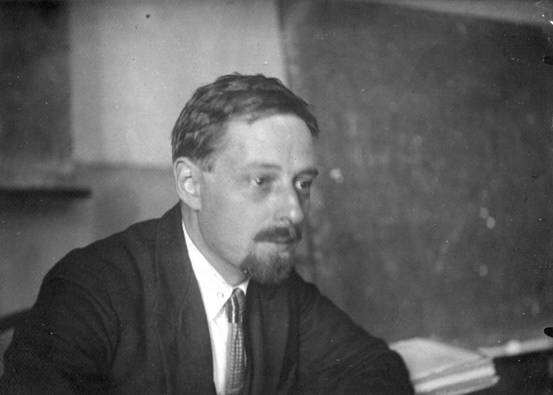
Propp's theory which was developed in 1938, suggests that the narrative structure of a film is as follows;

Todorovs theory, which was developed in 1954, suggests that the narrative structure of a film is as follows;
Vladimir Propp -
was a Russian and Soviet formalist scholar who analyzed the basic plot components of Russian folk tales to identify their simplest irreducible narrative elements.
- Preparation
- Complication
- Transferance
- Struggle
- Return
- Recognition
- the villain, who struggles with the hero
- the donor, who prepares and/or provides hero with magical agent
- the helper, who assists, rescues, solves and/or transfigures the hero
- the Princess, a sought-for person (and/or her father), who exists as a goal and often recognizes and marries hero and/or punishes villain
- the dispatcher, who sends the hero off
- the hero, who departs on a search (seeker-hero), reacts to the donor and weds at end
- the false hero (or antihero or usurper), who claims to be the hero, often seeking and reacting like a real hero (ie by trying to marry the princess)
Tzvetan Todorov -
is a Franco-Bulgarian philosopher. He has lived in France since 1963 writing books and essays about literary theory, thought history and culture theory.
Todorovs theory, which was developed in 1954, suggests that the narrative structure of a film is as follows;
- Equilibrium
- Disruption
- Recognition of disruption
- Attempt to repair disruption
- A return or restoration of new equlibrium.
Subscribe to:
Posts (Atom)